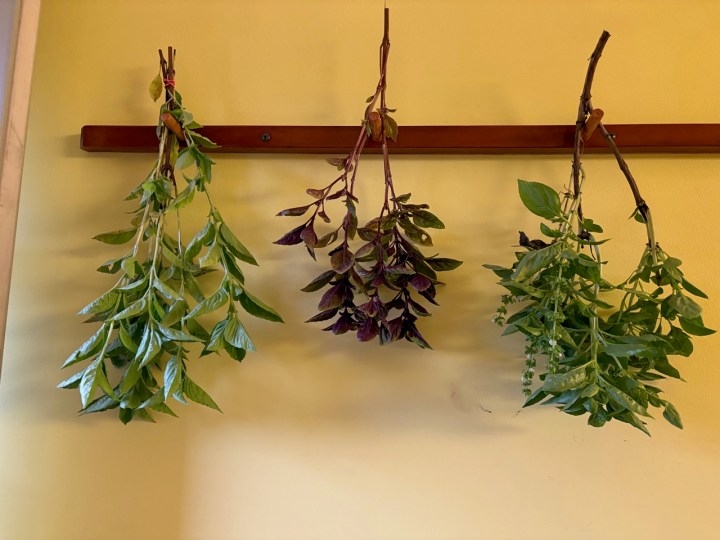
I have always loved herbs. When I was growing up, we used herbs in everyday cooking in our traditional Lebanese household. Mom grew her herbs in a big, black iron wash kettle outside by the back door steps. The scents of basil, thyme, marjoram and mint were familiar aromas in her tiny suburban kitchen.
That same black iron kettle stands in the center of my herb garden today planted with several kinds of basil, including sweet and Thai basils for seasoning food and holy basils for teas. A quick look this morning told me all I need to know – the basil, along with the Bergarten sage, stevia, thyme, hyssop, chives, mints and lavender, need to be preserved for the upcoming winter.
While most of our herbs are preserved by drying or freezing, we do bring some to overwinter in the house.
Let’s talk about all these methods of preserving herbs for winter use.
If you have fresh culinary herbs, do think about preserving them. You won’t be spending a dime, and will be happy to have your own cache of home preserved, healthful herbs.
The bonus? You get some aromatherapy along the way!
Here’s some preserving ideas to get you started.
Preserve herbs by air drying
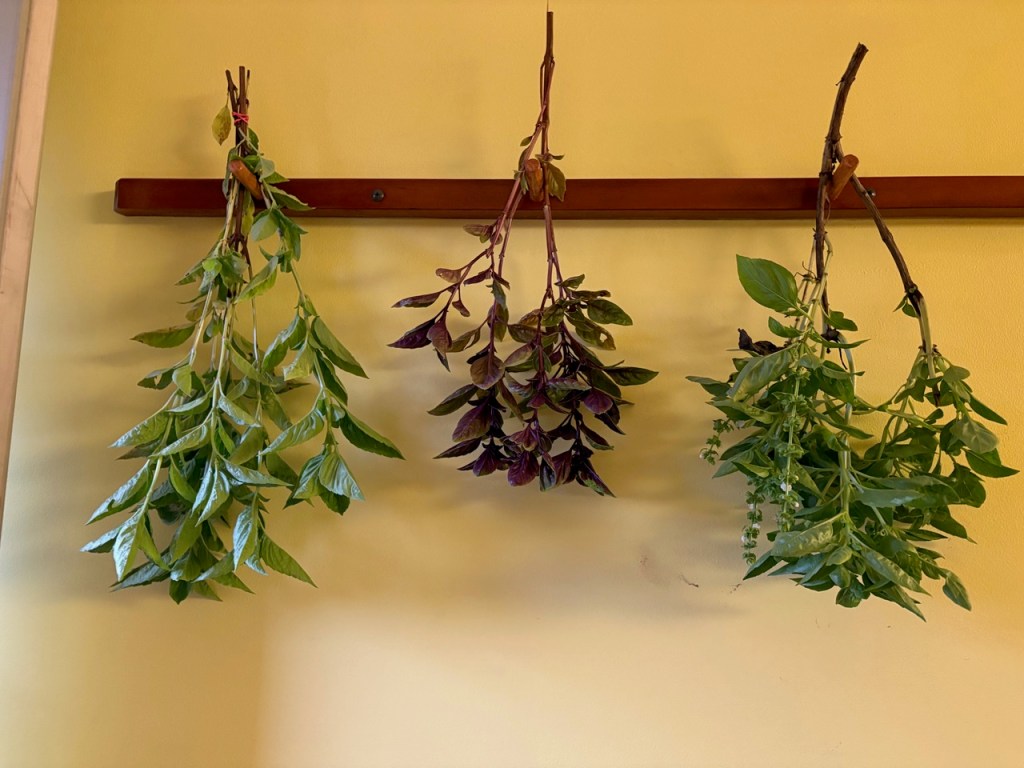
- Hang in bunches with enough air circulating between stems away from sunlight and moisture.
- You can also strip leaves from stems. Lay in single layer on cooling racks or on towels to dry.
- When herbs are dry enough to crinkle between your hands, they’re ready to store.
- Store in air tight containers away from light, heat and moisture. Herbs do lose some color when dried.
Freeze herbs with a bit of oil
- Put whole herbs in food processor with a little bit of neutral oil, process until chopped to your liking, then pour into ice cube trays and when frozen solid, remove from trays and store in freezer bag. You can also chop herbs by hand.
- Pour prepared chopped herbs into freezer baggies, lay flat and smoosh air out. Freeze hard, then stack. To use, just cut or break off what you need.
Now remember herbs will turn dark but are flavorful to use in cooked dishes.
Winter herbs over indoors
Here’s where it gets tricky. Herbs don’t always follow the rules.
Sometimes both annual and perennial herbs survive winter when placed in a light, airy, warm place.
I’ve had good results with chives, basil, dill and parsley, watered as needed.
Rosemary is more difficult to winter over in our home since the air is more dry. This herb is what I call an “upside down” herb. Rosemary likes her roots a bit dry, but she does best with good air circulation and in a spot where leaves can pick up moisture from the air. Or give it a spritz of water every now and then.
Herbs wintered indoors will usually contain less flavor than those grown outside, but it’s a small price to pay to have fresh herbs at your fingertips!
Rita talks about herbs with Amy Tobin
Check out Amy’s podcast with me on Amy’s Table podcast.