

Before I begin, I just found a lot of super information about plants for terrariums on The Spruce site – https://www.thespruce.com/great-terrarium-plants-847877 so check this out, too!
Mary Gardens were started during medieval times and were usually gardens that were enclosed, often in monasteries.
I have always felt that an herb garden needs a statue of Mary, even before I had ever heard about Mary Gardens. Mary Gardens date back to medieval times and were enclosed. They were places of quiet beauty where one could pray and think about our Mother.
When you think about Medieval Christians, their search was for the most exact likeness of Mary. How did flowers and herbs fit into this?
They realized that out of all God’s creations none could rival the flowers in representing her purity, her holy beauty and her glory. So, fragrant herbs and flowers remind us of her spiritual sweetness, the soothing and healing herbs remind us of her heavenly mercy and compassion and we even have the bitter and sour herbs, which remind us of her bitter sorrows.
Crowning Mary with a crown of flowers dates back to ancient times.
When we were kids, May crowing was a big event. I remember the grotto that Mary was in. We had Mary Gardens without realizing it!
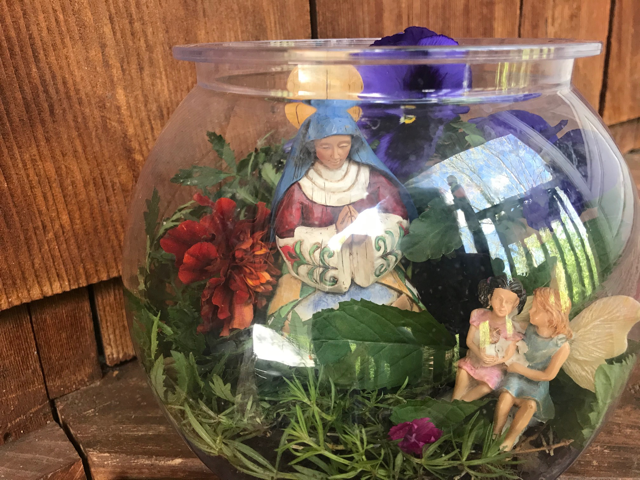
As far as Mary Gardens go, so many ways to do it. You could do an inground Mary Garden like you have. Container Mary Gardens are popular too. But you’ve gone a little further when it comes to container gardening. You’re making terrarium Mary Gardens this year with your grandkids. bbbbbbb
What are the basics of a terrarium Mary Garden?
The first thing to get is a statue of Mary. That will determine the size and kind of terrarium. For example, if you have a Mary statue from an unused nativity scene, that would be perfect.
Terrariums can be enclosed or open. A terrarium with an open top is fun and takes a little more tending than an enclosed terrarium.
Check around the house. Glass canning jars, fruit and pickle jars, gold fish bowls, just about anything that lets light in will work.
Also the size of the terrarium will determine what kinds of herbs and flowers you’ll have.
The opening of the container should be large enough for whoever is making the terrarium to get their hand into.
Be sure to buy plants that are small enough to fit into your terrarium container, preferably without touching the sides of the glass. A good way to make sure they’ll fit is to bring your container with you to the nursery or bring measurements.
Before you plant, you have to have a good base of pebbles on the bottom for drainage, then some good potting soil, enough to support and feed the plants, and then the plants.
Have a spritzer filled with water for watering.
I like smaller varieties of traditional Bible herbs. Roses certainly. And I would plant the miniature roses. Roses are the emblem of Mary and she is called the First Rose of Martyrs.
What about Forget-me-nots – those pretty little blue flowers.
In a German legend, the Lord named all the plants when a tiny unnamed one cried out, “Forget-me-not, O Lord!” God replied, “That shall be your name.” Forget-me-nots represent the beautiful blue eyes of Mary.
Impatiens are a nice container plant.
Impatiens represent a mother’s love, the their size is nice for containers.
The name of a common flower, marigold, has significance, too.
Marigolds are called “Mary’s gold”, and the one I would suggest is lemon gem, it’s a delicate plant with tiny golden flowers.
How would rosemary fit in a container Mary Garden?
Rosemary’s name comes from the legend that Mary tossed her blue cloak over the bush which had white flowers. They turned blue in her honor. Try a trailing rosemary would be good for a terrarium.
A Mary Garden wouldn’t be complete without mint.
Mints, mentioned as tithing herbs in the Bible, can quickly take over. The smaller the mint, the better. There’s a mint called Corsican mint that makes a lovely mat for the statue of Mary.
And pansies are perfect for a container Mary Garden. This edible flower is often called “Our Lady’s Delight”.
Let’s talk about thyme.
Try one of the creeping thymes or “steppin” thymes, both low growing. Some people use it as bedding for Jesus’ manger.
And basil, a common culinary herb, is beautiful in terrariums. There are small varieties like globe basil, and form a pretty mound instead of growing straight up.
FRITTATA FOR MOM
During the spring our girls/chickens lay an abundant amount of eggs.
One of the nests has been taken over by our little bantam hen. She wants to be a momma so is in a broody state, only leaving the nest for food and water.
In the meantime there are still enough eggs to make frittatas for our annual Mother’s Day brunch.
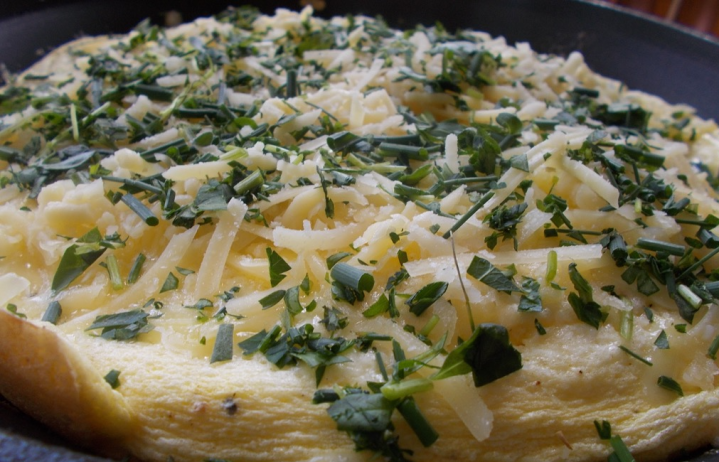
For those of you not familiar with frittatas, the name means “fried” in Italian. A frittata is an egg-based dish similar to but not exactly like an omelet or quiche.
The cooking process is started on the stovetop and finished in the oven.
Frittatas can be served warm or room temperature. I’m sharing 2 family favorites, one classic and one a bit more rustic.
As far as cooking a frittata, a nonstick ovenproof omelet pan with sloping sides works best. I use a 10” pan and the frittata slides right out.
Happy Mother’s Day to each and every one of our Moms. You truly are the heart of the home!
Classic frittata with herbs
This produces a lovely, herb flavored frittata.
Ingredients
4 large eggs
Salt and pepper to taste
4 tablespoons butter
6-8 oz Gruyere, white cheddar or Fontina cheese, shredded
2 tablespoons each: fresh tarragon or basil, chives, and parsley
Parmesan for garnish
Instructions
Preheat oven to 375.
Separate eggs. Whisk yolks with a little salt and pepper, until thick and fairly light.
Beat whites with a dash of salt until stiff but not dry.
Pour yolks over whites and gently fold into whites.
Melt butter over medium heat in a 10” nonstick ovenproof omelet pan until starting to foam but not brown.
Pour egg mixture into skillet, spread evenly and smooth top.
Cover pan with lid whose underside has been sprayed to prevent sticking. (Or use sprayed foil.)
Cook over low heat 5 minutes. Remove cover and sprinkle omelet with cheese and about half the herbs.
Put in oven until frittata is cooked, about 10 minutes.
Remove, use spatula to loosen edges and bottom and turn onto plate.
Sprinkle with Parmesan and remaining herbs, cut into wedges to serve.
Bacon spinach frittata
Lots of flavor in this rustic frittata.
Ingredients
5 large eggs
1/2 pound bacon, diced small
1/2 cup leeks or onions, diced
1 nice clove garlic, minced
2 cups fresh spinach or chard, chopped
Black pepper to taste
Tomatoes for garnish
Instructions
Preheat oven to 375.
Whisk the eggs until light and a bit fluffy.
Cook bacon over medium heat in 10” nonstick, ovenproof omelet pan. Remove and leave the drippings in skillet.
Put leeks in skillet and when they start to get soft, add garlic and spinach.
Add bacon back into the pan and mix.
Pour in eggs and cook just until eggs set around the edges.
Put in oven until frittata is cooked, about 10 minutes.
Remove, use spatula to loosen edges and bottom and turn upside down onto plate.
Garnish with tomatoes, cut into wedges to serve.
Tip:
Make it ahead.
Frittatas reheat nicely, covered, in 300 degree oven.


Perfect timing! I am going to start a Mary’s garden and was trying to figure out what to plant. Thanks for all the info.
LikeLike