

Our new neighbors greeted me early this morning as I was hoeing the tomato row in the vegetable garden. The duo ambled to the fence that separates our properties and one word came to mind: gentle. Bristol and Poppy, Highland cows with shaggy coats, are the latest four-footed members of the Humbert family. We are sure enjoying this addition to our landscape.
When granddaughters Emerson and Ellery came over this afternoon to plant Indian corn, they put in extra seeds for both the cows and our chickens.
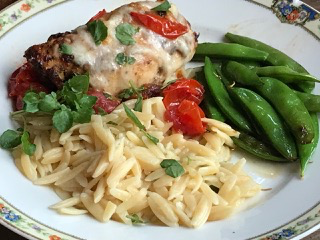
Well, hoeing those tomatoes inspired me to make one of our favorite suppers. It’s a quick Caprese chicken recipe. The name comes from the fact that 3 of the ingredients – tomatoes, mozzarella and basil – are ingredients in the iconic Caprese salad. This time, though, they play a supporting role as a flavorful, bright topping for sautéed chicken breasts or thighs.
Let me know if you make it. I hope you do!
Caprese chicken
Skinless, boneless breasts or thighs both work well. You have more leeway, cooking wise, with thighs since their dark meat is more moist than white.
If you’re growing basil and it’s starting to flower, go ahead and give it a haircut and use the trimmings, both leaves and flowers, in this dish.
Balsamic vinegar adds a sweet, acid note to the savoriness of the chicken.
Recipe can be divided in half.
Ingredients
4-6 boneless, skinless chicken breasts or thighs
Salt and pepper
2 pints or so grape or cherry tomatoes, halved, or equivalent regular tomatoes, diced
1/4 cup olive oil, divided
Enough thick slices mozzarella to cover each piece
Good handful fresh basil, chopped – a generous 1/2 cup or so
4 large cloves garlic, minced – a generous tablespoon or so
Balsamic vinegar – optional but good
Instructions
Season chicken on both sides with salt and pepper or seasoning salt and pepper.
Film the bottom of a large sauté pan with olive oil, a couple tablespoons.
Turn heat to medium high. Add chicken to pan and cook about 10 minutes on each side, turning once, until cooked through. See tip below.
Keep warm while making Caprese topping.
Add rest of oil, a couple tablespoons, to pan. Add garlic and turn heat down a bit. Cook until fragrant but not brown, a couple of minutes.
Stir in tomatoes, raise heat back to medium high, and cook until they start to wrinkle and skin softens. Stir in basil. Season with salt and pepper if you like.
Top chicken with tomato mixture. If there’s extra, just spoon it around the chicken.
Lay cheese on top.
Either put lid on pan for cheese to melt (turn heat off) or run under broiler.
Splash each piece with a bit of vinegar.
Tip: turn when you see the cook line
Before turning over, let chicken cook until you see the “cook line” which means the chicken is halfway cooked. The bottom half will be done but the top half will be raw. That way you only have to turn the chicken once.

- Those herb baskets planted for Mother’s Day are probably growing abundantly. Ditto with herbs planted in the ground, especially the perennial herbs.
- What’s a general rule of thumb for harvesting herbs? How soon can it be done?
- Snip leaves from annual herbs such basil, cilantro and dill as soon as the plant is 6-8 inches tall.
What happens when they go into flower?
- Try and cut flowering tops off herbs before they come into full flower. Once the herb starts producing flowers, leaf production declines and flavor is affected. Basil and sage are good examples.
- Thyme sometimes dies out in patches but not the whole plant. Is it salvageable?
- Yes. Take a trowel and do root pruning. Just shove the trowel down into the dead part and remove it. You’ll probably wind up with several smaller plants. They are great to share.
Cilantro and dill grow so fast! If I cut the flowers off, will they get bushier like basil?
Cilantro and dill do not recover like basil does. Although they love sun, when it gets hot, both will bolt to flower and seed. They can be pruned a bit. Best to make successive plantings.
- Parsley and chives are popular herbs. How do you trim them?
- Cut parsley and chive stems close to the base, about an inch from the soil. New growth should appear in about a week.
What about rosemary?
She can use a good haircut, too. Sometimes the leaves turn brown. Don’t toss them. They are a great pantry dried herb.
 About Eating